
Lucky Gulch / Pachinko / Is pachinko gambling?
Is pachinko gambling?
Under Japanese law, pachinko is not gambling: parlors are licensed as amusement businesses and may pay only in prizes, never in cash. In practice, most players trade special prizes for cash at a separate shop next door, which is why many people see it as gambling all the same.
 Try it just for funPlay our pachinko machines100% free. No signup. Just for fun.Play pachinko ▸
What Japan's gambling law says
Japan's Penal Code makes gambling a crime. Article 185 sets a fine of up to 500,000 yen, unless the stake is only something for momentary entertainment, like a snack. Article 186 sets prison terms for habitual gambling and for running a gambling house. Betting is allowed only where a separate law permits it: the public races (horses, bicycles, boats and motorbikes), the national lotteries, and the sports lottery.
How pachinko fits
Pachinko parlors are licensed under the Act on Control and Improvement of Amusement Business, from 1948. Article 23 forbids a parlor to:
- give cash or securities as prizes,
- buy back prizes it has given out,
- let balls or medals leave the premises.
The regulations add more. A ball may cost no more than 4 yen and a pachislot medal no more than 20 yen, plus tax. Prizes must be goods equal in value to the balls won, with a wide range of everyday items on offer, and no single prize may be worth more than 9,600 yen plus tax.
The three-shop system
Here's how winnings turn into cash anyway:
- The parlor gives you a special prize for your balls, often a small item holding a bit of gold or silver.
- An exchange shop, a separate business usually a few steps away, buys the special prize from you for cash.
- A wholesaler buys the prizes from the exchange shop and sells them back to the parlor.
Because the parlor never pays cash and never buys its own prizes back, each step stays inside the rules. The system has run in the open for decades.
Casinos in Japan
Japan has no casinos open today. A 2018 law allows a small number of integrated resorts with casinos, and the first one, in Osaka, was approved in 2023 and is set to open in 2030.
Pachinko and pachislot
Pachislot, the slot machine side of every parlor, works under the same rules: medals instead of balls, prizes instead of cash. Pachinko vs pachislot.
Maneki Pachinko is just for fun
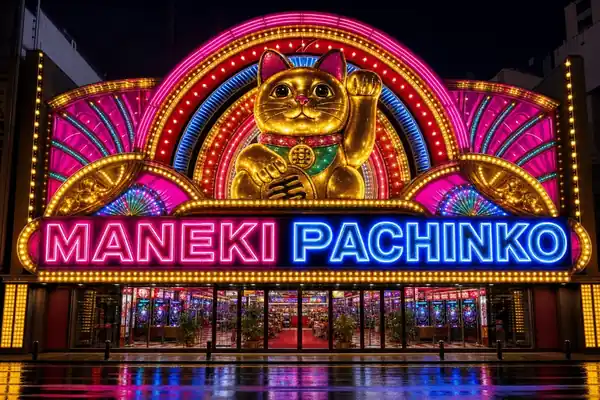
Maneki Pachinko is a social casino with play money only. There's nothing to buy, the balls have no cash value, and nothing you win can be exchanged for money or anything of real value. The charms at the gachapon prize wall are play items for your collection. It's for adults 21 and over, and it runs in your browser with no signup and no download. Play Kitsune vs Tengu.
Try it just for funPlay our pachinko machines100% free. No signup. Just for fun.Play pachinko ▸
Questions
Is pachinko legal in Japan?
Yes. Pachinko parlors are licensed under Japan's law on amusement businesses, which bans cash prizes and limits ball prices and prize values.
Is gambling legal in Japan?
Gambling is a crime under Japan's Penal Code, except where a separate law allows it: the public races, the national lotteries and the sports lottery.
How do people get cash from pachinko?
They trade balls for special prizes at the parlor, then sell the prizes for cash at a separate exchange shop nearby. This is called the three-shop system.
Are there casinos in Japan?
Not yet. The first casino resort, in Osaka, was approved in 2023 and is set to open in 2030.
Can you win money playing Maneki Pachinko?
No. It's play money only, just for fun. Balls and charms have no cash value and can't be exchanged for anything of real value.
More: What is pachinko? · How to play pachinko · How pachinko machines work · Pachinko parlors in Japan · Pachinko vs pachislot · Pachinko balls · Vintage pachinko machines · Maneki-neko, the lucky cat · Gachapon machines, Japan's capsule toys · Japanese good luck charms · Kitsune and tengu