
Lucky Gulch / Pachinko / Japanese good luck charms
Japanese good luck charms
The best-known Japanese good luck charms are the maneki-neko lucky cat, the daruma doll, and omamori, the small amulets from shrines and temples. Each one has its own job, from bringing in customers to keeping you on track for a goal.
 Now try it yourselfPlay our pachinko machines100% free. No signup. Just for fun.Play pachinko ▸
The big three
| Charm | Japanese | What it's for |
|---|---|---|
| Maneki-neko (lucky cat) | 招き猫 | Beckons customers and money |
| Daruma doll | 達磨 | Goals and never giving up |
| Omamori | お守り | Protection and luck for one thing in particular |
Daruma doll
A daruma is a round, hollow doll, usually red, modeled on Bodhidharma, the founder of Zen Buddhism. Its weighted base makes it stand back up when you push it over, which goes with the saying "fall down seven times, get up eight". Daruma come with blank eyes. You paint in one eye when you set a goal and the other when you reach it. After the new year, many people take their old daruma back to a temple to be burned. The tradition is tied to Shōrinzan Daruma-ji in Takasaki, which holds a daruma fair every year.
Omamori
Omamori are small charms sold at Shinto shrines and Buddhist temples: a silk brocade pouch with a prayer on paper or wood inside. Each one is for something specific: safe driving, passing exams, good business, finding love, a safe birth, a happy home. You carry it on a bag or keep it close, and you never open it, or the protection is said to be lost. Many people get a new one each year and return the old one to the shrine, where it is burned.
Maneki-neko
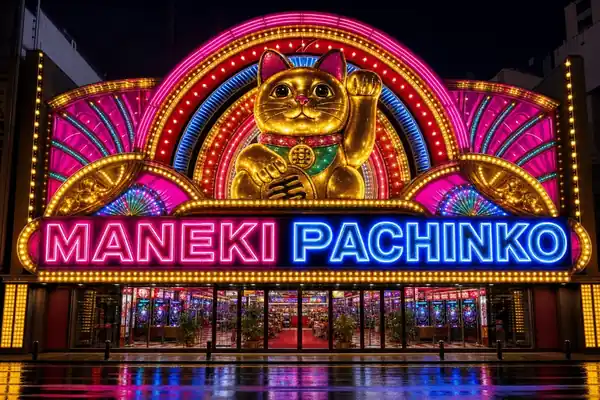
The lucky cat with one paw raised, beckoning luck inside. It sits by the door of shops, restaurants and pachinko parlors. What the paws and colors mean.
More charms you'll see
- Paper cranes (折り鶴). Folding a thousand, a senbazuru, is said to grant a wish.
- Koban (小判). Old gold coins from the Edo period, often held by lucky cats.
- Temple bell (梵鐘). Rung 108 times on New Year's Eve to see out the old year.
- Kitsune and tengu masks. The fox spirit and the mountain spirit, faces from Japanese folklore. Kitsune and tengu.
Collect them in Maneki Pachinko
The gachapon prize wall in Maneki Pachinko gives out 25 Japanese charms in four grades:
| Grade | Charms |
|---|---|
| 並 Common | Daruma, Omamori, Koinobori, Paper Crane, Wind Chime, Sake Cup, Paper Lantern, Onigiri |
| 上 Uncommon | Kitsune Mask, Tengu, Kokeshi Doll, Bonsai, Koi, Temple Bell, Sensu Fan, Kendama |
| 特上 Rare | Jade Dragon, Koban Stack, Samurai Kabuto, Sakura Spirit |
| 伝説 Legendary | Gold, Jade, Sakura, Samurai and Kitsune Maneki |
Each one you win lights up on its shelf in your glass display case. They're play items, won with play-money balls from Kitsune vs Tengu, just for fun.
Now try it yourselfPlay our pachinko machines100% free. No signup. Just for fun.Play pachinko ▸
Questions
What are Japanese good luck charms called?
The best known are maneki-neko (the lucky cat), daruma dolls and omamori. Omamori is the general word for shrine and temple amulets.
What does a daruma doll mean?
Perseverance and goals. You paint one eye when you set a goal and the other when you reach it.
What is an omamori?
A small charm from a Shinto shrine or Buddhist temple, a cloth pouch with a prayer inside, made for a specific kind of luck or protection.
Can you open an omamori?
Tradition says no. Opening it is said to let the protection out.
What do you do with an old daruma or omamori?
Many people return them to a temple or shrine, where they are burned, often around the new year.
More: What is pachinko? · How to play pachinko · How pachinko machines work · Pachinko parlors in Japan · Is pachinko gambling? · Pachinko vs pachislot · Pachinko balls · Vintage pachinko machines · Maneki-neko, the lucky cat · Gachapon machines, Japan's capsule toys · Kitsune and tengu